
Battery for local radio
The local radio station is to get a battery – at the moment the excess electricity is fed into the grid without being remunerated. With the battery, the electricity can be used by the local radio itself.
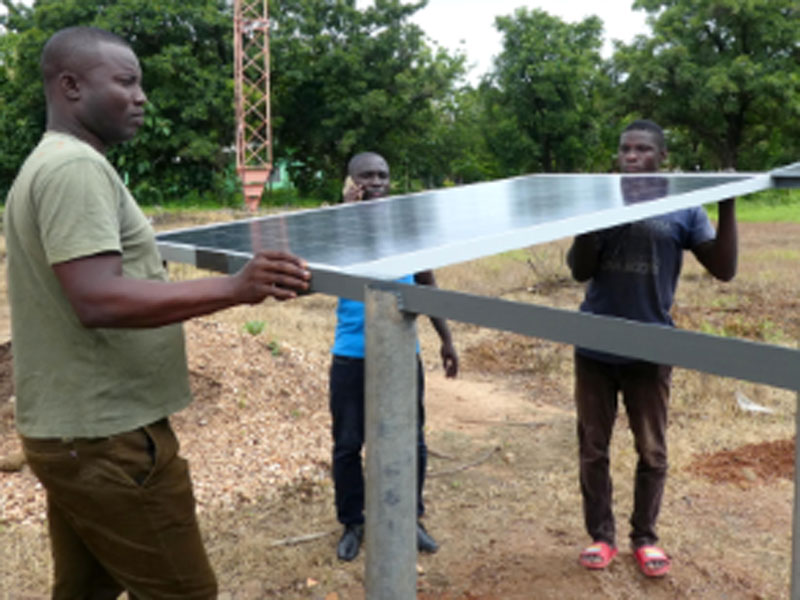
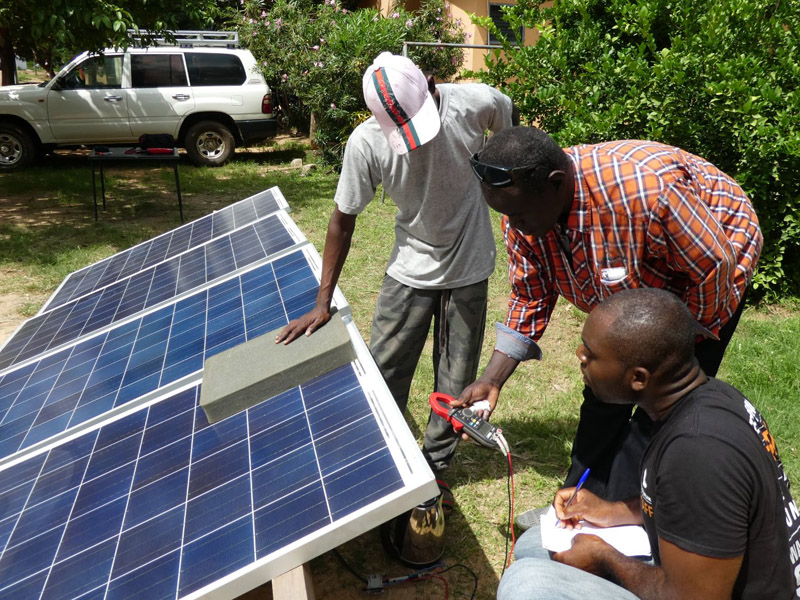
A solar system is a good thing – Radford FM in Tumu produces over 50% of its own electricity, thanks to a PV system sponsored and installed by FairTrade Energy. In the evenings around prime time, however, the sun no longer shines. Then the electricity has to be drawn from the grid, and unfortunately there are many grid failures then. So without a battery, the solar system is useless – a solar inverter can’t produce electricity if the grid voltage is missing, and if it did, it wouldn’t help either, because the PV system would be much too weak to power the whole grid. Last but not least, without a battery, the excess power has to be fed into the grid, and in Ghana you don’t get any compensation for that, so over 30% of your own production is lost. Quintessence: with a battery, the entire self-production could be used, the radio would be able to continue broadcasting even in the event of a power failure and would also broadcast in the evenings with solar power.
Since a large part of the population is illiterate, the local radio has a great importance. This way the population can be informed about events and at the same time the Sisaala people (about 150’000 people) will be strengthened.
A battery with an inverter costs a total of about 17’000 CHF – the radio cannot afford that. There is no support from the state, the electricity costs are exorbitantly high and the power grid is very unreliable.
Impressions on location